

Westminster Abbey Map & Layout — Orientation Guide 2026
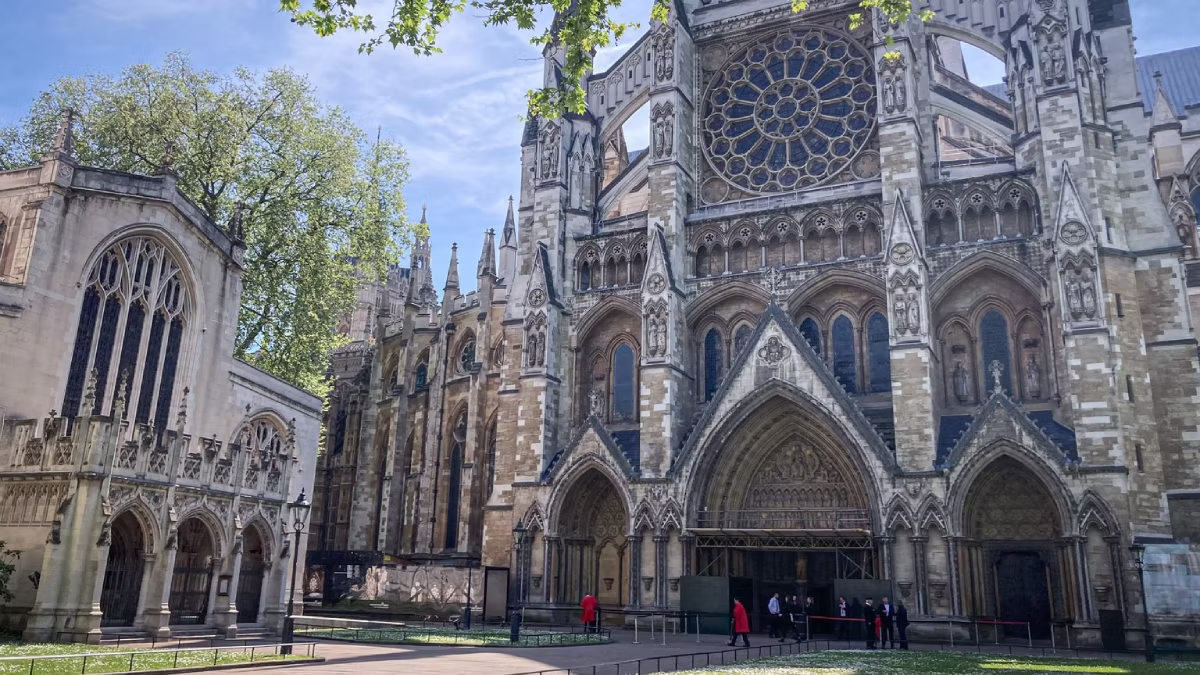
Westminster Abbey is laid out as a cross. You enter through the North Door, then the route runs down the Nave past the grave of the Unknown Warrior, through the Quire to the sanctuary and Cosmati Pavement, east to the Lady Chapel and the shrine of St Edward, to Poets’ Corner in the south transept, and out to the Cloisters and Chapter House, with the Jubilee Galleries high above.
Westminster Abbey packs a thousand years of history into a building shaped like a Latin cross, and first-time visitors often find it disorienting — the one-way route weaves past hundreds of memorials in a compact footprint. Knowing the layout before you go turns a confusing shuffle into an ordered tour.
This guide walks you through the Abbey’s plan in the order you’ll actually experience it, from the North Door to the Cloisters, so you know where each highlight sits.
Westminster Abbey Layout at a Glance
| Area | Where It Is | What’s There |
|---|---|---|
| North Door | North transept | Entry point |
| Nave | West end | Unknown Warrior, west towers |
| Quire | Center | Carved stalls, processional heart |
| Sanctuary | East of Quire | High altar, Cosmati Pavement |
| Lady Chapel | Far east | Henry VII Chapel, royal tombs |
| Shrine of St Edward | Behind the altar | Edward the Confessor, Coronation Chair nearby |
| Poets’ Corner | South transept | Writers’ memorials and graves |
| Cloisters & Chapter House | South side | Medieval walkways, octagonal room |
| Jubilee Galleries | Above the floor | High-level museum and views |
Where You Enter: The North Door
Visitors enter Westminster Abbey through the North Door, in the north transept facing Parliament Square — the ornate, sculpture-covered north front you see from the street. From here the route flows west into the Nave first, then loops back east through the Quire, sanctuary and chapels before exiting via the Cloisters.
The North Door is the grand ceremonial entrance all sightseers use, set into the elaborately carved north front facing the Houses of Parliament. Stepping inside, you stand at the crossing — the center of the cross-shaped plan, where the transepts, Nave and Quire meet. The route then takes you west first, which is why the Nave and Unknown Warrior come early even though they sit at the opposite end from the chapels.
The Nave and the Unknown Warrior
The Nave is the long, tall western arm of the Abbey, the highest Gothic nave in England. Just inside the Great West Door lies the grave of the Unknown Warrior, a First World War soldier buried in battlefield soil and the one tomb in the Abbey that is never walked upon. Nearby are memorials to Winston Churchill and other national figures.
The Nave gives the Abbey’s most breathtaking single view — soaring vaults drawing the eye toward the altar — and our guide to the nave and Gothic architecture explains what to look for overhead. Set into the floor near the Great West Door is the grave of the Unknown Warrior, ringed by red poppies and always left clear of footsteps — a quietly powerful stop early in the route.
The Quire and Sanctuary
The Quire runs down the center of the Abbey, its dark carved stalls facing each other where the choir sings daily services — a reminder that this is a working church. Just east of it lies the sanctuary, the ceremonial heart of the building, with the high altar and, in front of it, the medieval Cosmati Pavement, an intricate 13th-century mosaic floor where monarchs are crowned. This is the stage for every coronation since the Middle Ages.
The Lady Chapel and the Shrine of St Edward
At the far eastern end is the Lady Chapel, also called the Henry VII Chapel, famous for its fan-vaulted ceiling and the tombs of monarchs including Elizabeth I and Mary I. Just west of it, behind the high altar, is the shrine of St Edward the Confessor, the Abbey’s holiest spot, surrounded by medieval royal tombs. The Coronation Chair stands nearby.
The eastern end is where the royal history concentrates. The Lady Chapel closes the building with its extraordinary pendant fan vaulting and rows of Tudor and Stuart tombs. Immediately west of it, raised behind the sanctuary, sits the shrine of St Edward the Confessor, the sacred core around which the whole Abbey was built, encircled by the tombs of medieval kings and queens. The ancient Coronation Chair stands close by; our guide to the Coronation Chair explains its role.
Poets’ Corner
Turning back toward the exit, the route passes through the south transept — Poets’ Corner — where famous names are densest. Chaucer was the first writer buried here, joined over the centuries by Dickens, Hardy and Tennyson, with memorials to Shakespeare, Austen and the Brontës. Our guide to Poets’ Corner helps you pick out the ones worth finding.
The Cloisters, Chapter House and Jubilee Galleries
The visit spills out of the church into the Cloisters on the south side — open-sided medieval walkways around a green quadrangle, calmer and often overlooked. Off them lies the octagonal Chapter House, with its 13th-century tiled floor and wall paintings, covered in our Cloisters and Chapter House guide. High above the floor, reached by a lift or stairs, the Queen’s Diamond Jubilee Galleries offer a museum of Abbey treasures and a dramatic view down into the church — a separate ticket, but a memorable finish to the route.
Planning Your Route
Follow the one-way visitor route rather than navigating freely — it flows from the North Door through the Nave, Quire, sanctuary, chapels, Poets’ Corner and Cloisters in logical order. Allow about 1.5 to 2 hours, more if you add the Jubilee Galleries. Arriving at opening gives you the calmest run through the eastern chapels, which bottleneck later in the day.
Because the Abbey guides you along a set route, orientation is mostly about knowing what’s coming so you can pace yourself and linger where it counts, and the included multimedia guide keys its commentary to the same path. To budget your time, see our guide on how long to spend; to secure entry before you arrive, an entrance ticket lets you head straight to the North Door.
Frequently Asked Questions
How is Westminster Abbey laid out?
The Abbey is built as a Latin cross. You enter by the North Door, then the route runs west along the Nave, back through the Quire to the sanctuary, east to the Lady Chapel and shrine of St Edward, into Poets’ Corner, and out through the Cloisters, with the Jubilee Galleries high above.
Where do you enter Westminster Abbey?
Sightseeing visitors enter through the North Door, the ornate carved entrance in the north transept facing Parliament Square. From there the one-way route leads first into the Nave toward the Great West Door, then loops back east through the Quire, sanctuary, chapels and Poets’ Corner before exiting near the Cloisters.
Where is Poets’ Corner in the Abbey?
Poets’ Corner is in the south transept, on the right as you face the high altar, toward the end of the route. It holds the graves and memorials of writers including Chaucer, Dickens, Hardy, Tennyson, Shakespeare, Jane Austen and the Brontës.
Where is the Unknown Warrior’s grave?
The grave of the Unknown Warrior lies in the Nave, just inside the Great West Door. It’s set into the floor, ringed with red poppies, and is the only tomb in the Abbey that visitors never walk across. You reach it early, since the route heads west first.
Is there a one-way route through Westminster Abbey?
Yes, the Abbey directs visitors along a set route from the North Door through the Nave, Quire, sanctuary, eastern chapels, Poets’ Corner and out to the Cloisters. Following it is the easiest way to orient yourself and not miss the highlights.
How long does it take to walk through the Abbey?
Allow about 1.5 to 2 hours to follow the full route at a comfortable pace, taking in the Nave, royal tombs, sanctuary and Poets’ Corner. Add roughly 20 to 30 minutes for the Jubilee Galleries, and more if you expect to linger in the eastern chapels.
Where are the Cloisters and Chapter House?
The Cloisters are on the south side of the Abbey, covered medieval walkways around a green quadrangle, reached toward the end of the route. The octagonal Chapter House opens off their eastern side. Both are quieter than the main church and easy to miss if you rush the exit.
Where are the Jubilee Galleries?
The Queen’s Diamond Jubilee Galleries are set high in the medieval triforium, more than 50 feet above the floor, reached by a lift or stairs. They display Abbey treasures and offer a striking view down into the church, and need a separate timed ticket on top of admission.
