

Lady Chapel Westminster Abbey — Henry VII Chapel Guide
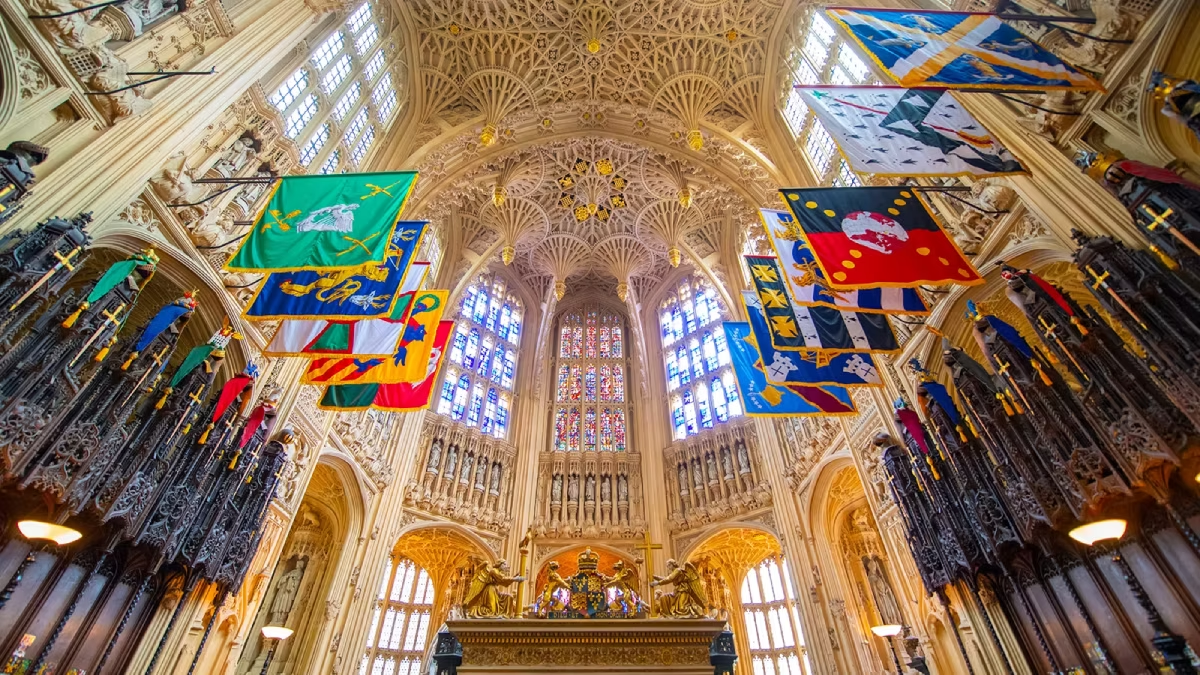
The Lady Chapel, also called the Henry VII Chapel, is the early-16th-century Perpendicular Gothic chapel at the east end of Westminster Abbey. It is famous for its pendant fan-vaulted ceiling, the shared tomb of Henry VII and Elizabeth of York, the graves of Elizabeth I and Mary I, and the RAF Chapel with its Battle of Britain window. Entry is covered by a standard Abbey admission ticket.
Begun in 1503 and completed around 1516, the Lady Chapel is the most lavish single space in Westminster Abbey and one of the high points of English Gothic architecture. Henry VII built it as a burial chapel for his new Tudor dynasty, and the craftsmanship shows it — the antiquarian John Leland called the ceiling a “miracle of the world.”
It sits behind the shrine of St Edward the Confessor at the far east end of the church, so you reach it near the end of the standard visitor route. This guide covers the ceiling, the royal tombs, the RAF Chapel and the banners of the Order of the Bath, plus how the chapel fits into a wider visit.
The Lady Chapel at a Glance
| Detail | Henry VII Lady Chapel |
|---|---|
| Built | 1503–c.1516 |
| Style | Perpendicular Gothic |
| Built by | Henry VII |
| Famous for | Pendant fan-vaulted ceiling |
| Royal tombs | Henry VII, Elizabeth I, Mary I, and more |
| Also known as | The Henry VII Chapel |
The Fan-Vaulted Ceiling
The Lady Chapel’s ceiling is a pendant fan vault, a form unique to English Gothic, in which carved stone fans appear to hang from suspended keystones. It is the most elaborate example of the style in the country and looks almost like lacework carved from stone. The ceiling is the single most photographed feature of the chapel and the reason many visitors rank it above the rest of the Abbey.
Look straight up as you enter and the ceiling is the first thing that stops you. The masons hid the structural ribs behind delicate cones of fan tracery, and pendants drop from the vault as if defying gravity — an effect that took extraordinary confidence to build in 1500s stone. It rewards a slow look: the detail is easy to rush past on a busy day, so pause and let your eyes adjust to the height. If you enjoy this kind of craftsmanship, the wider Gothic architecture of the Abbey sets it in context.
The Tomb of Henry VII and Elizabeth of York
At the center of the Lady Chapel stands the bronze tomb of Henry VII and his queen, Elizabeth of York, made by the Italian sculptor Pietro Torrigiano between 1512 and 1518. Their gilded effigies lie on a black marble base, and it is considered the finest Renaissance tomb in Britain. It marks the founder of the Tudor dynasty and the parents of Henry VIII.
The tomb sits within a bronze screen at the heart of the chapel, and its Italian Renaissance style stands out against the English Gothic around it — Torrigiano brought a new realism to the royal effigies. Henry VII united the houses of Lancaster and York through his marriage to Elizabeth, and their monument is meant to project the legitimacy of a young dynasty. It is one of the most important royal tombs in the Abbey, and part of the larger story of who is buried here.
Elizabeth I, Mary I and the Tudor Graves
The chapel’s north aisle holds one of the Abbey’s most-visited tombs: Elizabeth I, buried above her half-sister Mary I, under a single monument bearing Elizabeth’s effigy. The Latin inscription notes the two Protestant and Catholic queens sharing a grave — “companions in the realm and the tomb.” In the south aisle lies Mary, Queen of Scots, moved here by her son James I, whose own remains were later found in Henry VII’s vault. Together these graves make the Lady Chapel the tightest concentration of Tudor and Stuart royalty anywhere.
The RAF Chapel and the Battle of Britain Window
At the far east end of the Lady Chapel is the Royal Air Force Chapel, dedicated in 1947 to the airmen who died in the Battle of Britain in 1940. Its stained-glass Battle of Britain window shows the badges of the 63 fighter squadrons that took part. A small hole in the wall nearby, left from wartime bomb damage, has deliberately been preserved.
This is the modern heart of the chapel and a quiet, moving space. The window, designed by Hugh Easton, glows with squadron insignia and figures of airmen, and it stands directly behind the site of Oliver Cromwell’s former burial. The preserved shrapnel hole in the stonework is easy to miss — a deliberate scar left as a reminder of the Blitz. It is one of the most affecting corners of the Abbey’s interior and a counterpoint to the Tudor grandeur around it.
The Banners of the Order of the Bath
Above the choir stalls hang the colorful heraldic banners of the Order of the Bath, one of Britain’s senior orders of chivalry, which has used the Lady Chapel as its spiritual home since 1725. Each knight’s banner, helm and stall plate marks a current member, and the carved stalls below are among the finest medieval woodwork in the Abbey. When the order installs new members at a service here, the banners are renewed — so the display changes over the years, a living tradition layered on top of a 500-year-old building.
Visiting the Lady Chapel
You reach the Lady Chapel toward the end of the standard visitor route, after the shrine of St Edward the Confessor and the Coronation Chair. It’s covered by a normal Abbey entrance ticket, with no separate charge, and the included multimedia guide has a dedicated stop here. Because it’s at the far end, it can get congested when tour groups bunch up in the early afternoon — arriving near the 9:30am opening gives you the calmest look at the ceiling. A guided tour can help you decode the heraldry and the Tudor politics on display.
Frequently Asked Questions
What is the Lady Chapel at Westminster Abbey?
The Lady Chapel is the richly decorated chapel at the east end of Westminster Abbey, built by Henry VII between 1503 and about 1516. It is dedicated to the Virgin Mary, which is why it’s called a “Lady Chapel,” but it’s more often known as the Henry VII Chapel after its founder. It houses royal tombs, the RAF Chapel and a celebrated fan-vaulted ceiling.
Why is it called the Henry VII Chapel?
Henry VII commissioned and paid for the chapel as a burial place for himself and the Tudor dynasty he founded, so it carries his name. He and his queen, Elizabeth of York, are buried at its center in a bronze tomb by Pietro Torrigiano. Because it replaced an earlier Lady Chapel on the same spot and is dedicated to the Virgin Mary, both names are correct and used interchangeably.
Who is buried in the Lady Chapel?
The chapel holds an exceptional group of royal graves: Henry VII and Elizabeth of York, Elizabeth I and Mary I sharing a tomb, Mary, Queen of Scots, and many other Tudor and Stuart figures including Edward VI. It’s the densest cluster of royalty in the Abbey, spanning the Tudor and early Stuart dynasties in a single space.
What is special about the ceiling?
The ceiling is a pendant fan vault, the most elaborate in England, where carved stone fans and hanging pendants create an effect like stone lacework. Built around 1500, it disguises the structural ribs behind decorative tracery and was admired even in its own day as a “miracle of the world.” It’s the chapel’s most famous feature and worth pausing under before you move on.
What is the RAF Chapel?
The Royal Air Force Chapel occupies the far east end of the Lady Chapel and was dedicated in 1947 to the airmen killed in the 1940 Battle of Britain. Its stained-glass window displays the badges of the squadrons that fought, and a preserved hole from wartime bomb damage sits in the wall nearby. It’s a modern memorial set within a Tudor space.
What are the banners hanging in the chapel?
They are the heraldic banners of the knights of the Order of the Bath, a British order of chivalry that has been based in the Lady Chapel since 1725. Each banner represents a current member and hangs above the medieval choir stalls, alongside carved helms and enameled stall plates. The display is renewed as new members are installed, so it changes over time.
Is the Lady Chapel included in a Westminster Abbey ticket?
Yes. The Lady Chapel is part of the main Abbey and included in a standard entrance ticket with no extra charge. It sits toward the end of the visitor route, past the shrine of St Edward the Confessor. A guided tour covers it in more depth, but only the Jubilee Galleries and verger-led tours carry a separate charge; the chapel itself is covered by general admission.
When is the Lady Chapel least crowded?
Because it’s at the far end of the route, the Lady Chapel gets busy when groups arrive together, usually mid-to-late morning. The quietest time is right at the 9:30am opening or in the last part of the afternoon. Aim to be inside early if you want an unobstructed view of the ceiling and the Elizabeth I tomb.
How long should I spend in the Lady Chapel?
Most visitors spend 15 to 20 minutes here, taking in the ceiling, the central tomb, the Tudor graves and the RAF Chapel. It’s a natural high point near the end of a 1.5-to-2-hour Abbey visit. If you’re interested in the heraldry of the Order of the Bath or the wartime memorial, allow a little longer to read the detail.
