

Cosmati Pavement Westminster Abbey — 2026 Visitor Guide
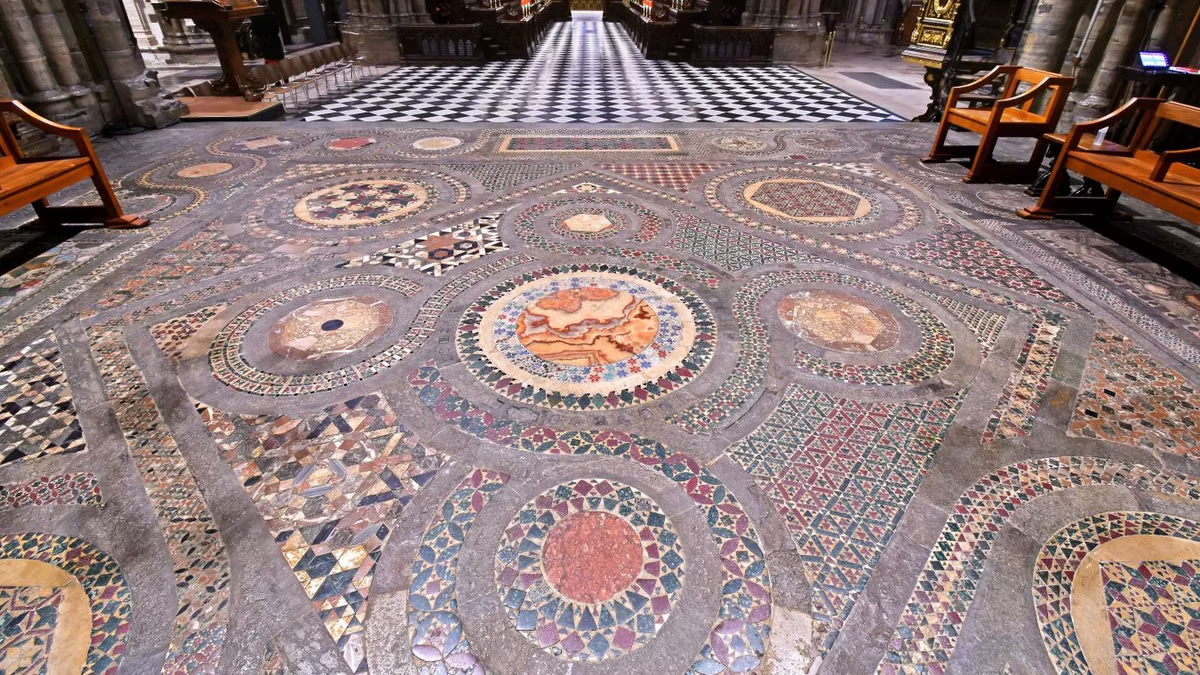
The Cosmati Pavement is the great mosaic floor in front of the High Altar, laid in 1268 during the rebuilding under Henry III by Italian craftsmen working in the Cosmati style. Its swirling geometry of porphyry, glass and colored stone once carried a Latin inscription about the age of the world, and every English coronation since — including King Charles III’s in 2023 — takes place directly above it.
Most visitors walk toward the High Altar without realizing that the floor beneath the coronation spot is one of the most important medieval artworks in Britain. The Cosmati Pavement is nearly 750 years old, unique in England, and central to the single ceremony the Abbey is most famous for.
This guide explains what the pavement is, the meaning of its inscription and geometry, why it matters at every coronation, and how and when you can actually see it in 2026.
What Is the Cosmati Pavement?
The Cosmati Pavement is a 13th-century mosaic floor in the sacrarium — the space in front of the High Altar — laid in 1268. It was commissioned during Henry III’s rebuilding of the Abbey and made by Italian craftsmen in the “Cosmati” technique, using cut porphyry, green serpentine, colored glass and stone set into a bed of Purbeck marble. It is the only pavement of its kind in Britain.
The pavement takes its name from the Cosmati family and their fellow marble-workers of medieval Rome, who specialized in geometric mosaic floors known as opus sectile — small pieces of precious stone cut and fitted into intricate patterns rather than the tiny cubes of classical mosaic. Abbot Richard de Ware brought the materials and at least one craftsman, named Odoricus, back from Rome, and the floor was completed in 1268.
The design is built around a central roundel and a series of interlocking circles and squares, worked in deep red porphyry, green serpentine, glass and gilded stone against the pale marble ground. It was laid as part of the wider project by Henry III, who rebuilt the Abbey in the French Gothic style from 1245 and gave it the shape you still see in the interior today.
The Symbolism and the Inscription
The pavement is read as a diagram of the cosmos. Its concentric geometry represents the ordered universe, and a Latin inscription once set in brass letters around the design gave the world a predicted lifespan — reckoning the age of the universe and, by extension, the date of the Last Judgment. Much of the original lettering is now lost, but the text was recorded before it disappeared.
Medieval scholars understood the pavement as a symbolic map of the created world, moving from the outer bounds of the heavens to a central sphere. The lost Latin inscription described this “spherical globe” as showing the “archetypal macrocosm,” and it worked out the lifespan of the world from a chain of numbers — an act of learned prophecy typical of the period rather than a literal calendar.
That blend of geometry, precious stone and cosmic meaning is exactly why the pavement rewards a slow look. It was never purely decorative: it was meant to be understood, a piece of theology written in marble beneath the feet of the clergy. The craftsmanship is echoed elsewhere in the Abbey, including in the Cosmati-work tomb of Henry III himself, which stands nearby among the royal monuments.
Its Role in Coronations
The Cosmati Pavement is the floor on which English coronations are staged. At the heart of the ceremony the sovereign is enthroned above it, and the Coronation Chair is brought to this part of the church, so the crowning takes place directly over the medieval mosaic. King Charles III was crowned above the pavement on 6 May 2023, continuing a tradition of coronations in the Abbey since 1066.
For a few hours during a coronation, this quiet stretch of floor becomes the ceremonial center of the nation. The Coronation Chair is moved from its usual place to the sacrarium, and the anointing and crowning happen on and around the pavement. Photographs from 2023 show the newly crowned monarch framed by the mosaic’s circles.
Because of that role, the pavement is protected far more carefully than an ordinary floor. It has survived centuries of ceremony largely because, for long periods, it was kept covered by carpet and only revealed for special occasions — which is also why so many earlier visitors never saw it at all.
How and When You Can See It in 2026
After a major conservation project completed around 2010, the Cosmati Pavement is normally on view rather than hidden under carpet, so most visitors on a standard ticket can see it from the edge of the sacrarium. You cannot walk on it, and access can be restricted for services, filming or state events, so its visibility is not guaranteed on any given day — confirm on the official site before your visit.
The floor was cleaned and stabilized in a conservation program finishing around 2010, after which it was uncovered for regular viewing for the first time in generations. On a typical sightseeing day you view it from the roped edge as you pass the High Altar; you will not be allowed onto the mosaic itself, for obvious reasons of preservation.
For a closer look and the fuller story, a verger-led tour or a professional guided tour is the best option, as guides can point out the geometry and explain the lost inscription. Standard entrance ticket admission still lets you see the pavement from the sacrarium edge on most days. Because the Abbey is a working church, the pavement can be covered or off-limits at short notice, so check the official website close to your date.
Frequently Asked Questions
What is the Cosmati Pavement at Westminster Abbey?
It is a 13th-century mosaic floor in front of the High Altar, laid in 1268 during Henry III’s rebuilding of the Abbey. Made by Italian marble-workers in the Cosmati style, it uses cut porphyry, serpentine, glass and colored stone set into Purbeck marble in an intricate geometric pattern. It is the only pavement of its kind in Britain and is the spot over which monarchs are crowned.
When was the Cosmati Pavement made?
The pavement was completed in 1268. Abbot Richard de Ware commissioned it and brought the materials and craftsmanship from Rome, where the Cosmati family and their contemporaries produced similar geometric floors. It was created as part of the wider Gothic rebuilding of the Abbey begun by Henry III in 1245, making it nearly 750 years old in 2026.
Why is it called “Cosmati” work?
The name comes from the Cosmati, a family of medieval Roman marble-workers, and is used broadly for the geometric opus sectile mosaic they and their peers produced in and around Rome. Rather than tiny cubes, the technique fits cut pieces of precious stone into patterns. Westminster’s pavement is a rare example of this Italian craft surviving in northern Europe.
What does the inscription on the Cosmati Pavement say?
A Latin inscription once ran in brass letters around the design, describing the pavement as a model of the cosmos and calculating the lifespan of the world — a form of learned medieval prophecy about the age of the universe and the end of time. Much of the original lettering has been lost over the centuries, but the text was recorded before it disappeared and is well documented.
Are monarchs really crowned on the Cosmati Pavement?
Yes. The pavement forms the floor of the coronation setting in front of the High Altar. During the ceremony the Coronation Chair is brought here and the sovereign is crowned directly above the mosaic. King Charles III was crowned above the pavement on 6 May 2023, continuing the Abbey’s role as the coronation church since 1066.
Can you see the Cosmati Pavement on a normal visit?
Usually, yes. Since its conservation was completed around 2010 the pavement is normally uncovered and visible from the edge of the sacrarium on a standard sightseeing visit. You view it from behind a rope and cannot step onto it. However, it can be covered or closed off for services, state occasions or filming, so its visibility on any specific day is not guaranteed.
Can you walk on the Cosmati Pavement?
No. Visitors cannot walk on the pavement, which is protected to preserve the fragile 13th-century mosaic. You view it from the roped edge of the sacrarium as you pass the High Altar. Access onto the floor is reserved for the clergy and for ceremonial occasions such as coronations, when it is carefully prepared and protected.
Was the Cosmati Pavement ever hidden?
Yes. For long periods the pavement was kept covered by carpet, both to protect it and because its condition had deteriorated, so many earlier visitors never saw it. A major conservation project cleaned and stabilized the floor and was completed around 2010, after which it was put back on regular public view. This is why interest in the pavement has grown in recent years.
How long do I need to see the Cosmati Pavement?
A few minutes at the sacrarium edge is enough to take in the pavement itself, but it sits within a full Westminster Abbey visit of around 1.5 to 2 hours. A guide or verger tour adds context and can help you read the geometry, so allow extra time if you want the full story of the floor and the coronation ceremony staged above it.
