

Westminster Abbey Accessibility — Wheelchair Guide 2026
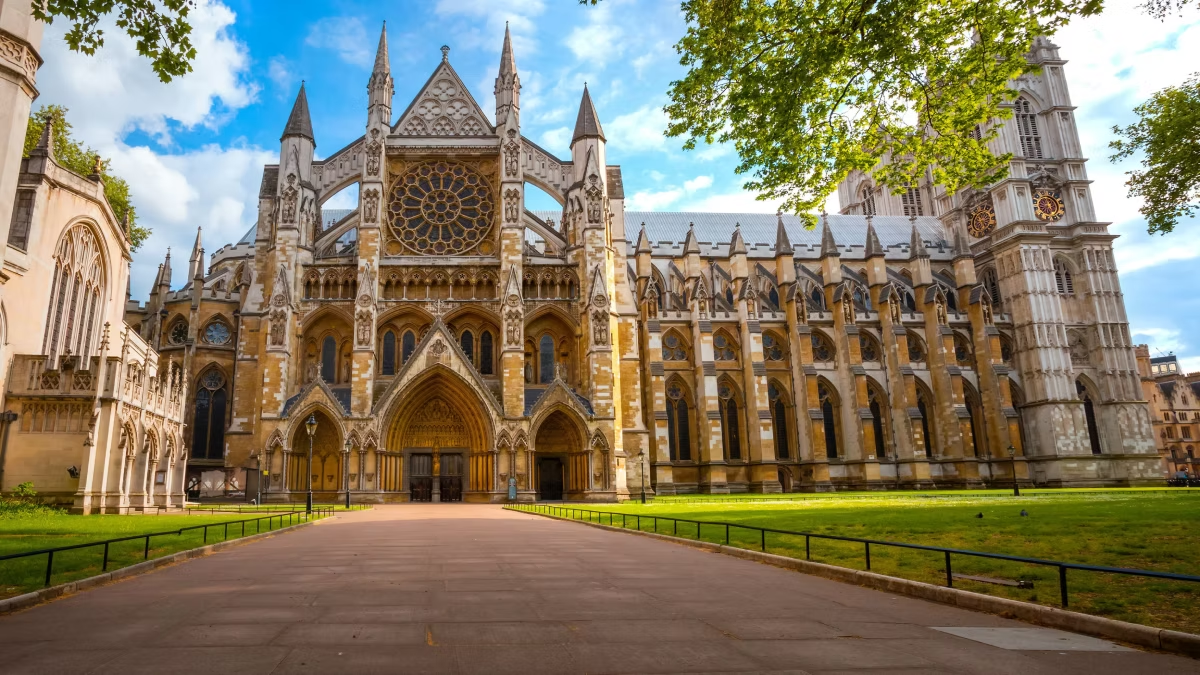
Westminster Abbey offers step-free access to most of the main church, with wheelchair-accessible routes around the historic, sometimes uneven medieval floors. A lift serves the Queen’s Diamond Jubilee Galleries, hearing loops are available, and assistance dogs are welcome. Because it’s an 800-year-old working church, some areas have limits, so confirm current provision and arrangements with the Abbey before you visit.
Westminster Abbey works hard to welcome visitors of all mobility levels, but it’s a Gothic church begun in 1245, with worn stone floors, level changes and tight medieval spaces that a purpose-built museum wouldn’t have. Most of the main route is accessible, and staff are on hand to help, but a little planning makes a big difference.
This guide covers step-free and wheelchair access, the uneven historic floors, accessible routes, the Jubilee Galleries lift, hearing loops, assistance dogs and toilets — and why you should always confirm the current arrangements with the Abbey directly.
Step-Free and Wheelchair Access
Most of the main Abbey — including the Nave, Poets’ Corner and the Cloisters — is reachable by step-free or accessible routes, and wheelchair users can see the great majority of the church. A few areas have level changes or steps tied to the medieval architecture. Staff can advise on the best route on the day, and it’s wise to confirm current step-free provision with the Abbey before visiting.
The main body of the Abbey is largely accessible on the level, so wheelchair and mobility-scooter users can experience the Nave, the highlights around Poets’ Corner and the royal tombs, and the Cloisters. Because the building predates any notion of level access, a handful of spots involve steps or ramps, and staff will guide you to the smoothest path.
Entry is through the North Door on the Parliament Square side; our getting there guide covers reaching that entrance, and Abbey stewards can direct wheelchair users to accessible arrival points. If you have specific requirements, contacting the Abbey ahead lets them prepare and confirm exactly what’s possible on your date.
The Historic Uneven Floors
Westminster Abbey’s floors are centuries-old stone, worn smooth in places and set with thousands of memorial ledger stones, so they can be uneven and slightly sloping. Wheelchair users and anyone unsteady on their feet should take care, and sturdy, flat footwear helps. The unevenness is part of the building’s age rather than a barrier, but it’s worth knowing before you arrive.
One thing photographs don’t convey is the floor itself. Much of it is medieval stone, polished by centuries of footsteps and inset with countless memorial slabs, which makes for a surface that dips and rises subtly. It’s navigable, but not billiard-table flat.
For wheelchair users this means a slightly bumpier ride in older sections, and for anyone unsteady it’s a reason to wear flat, grippy shoes and move at an easy pace. There’s no strict dress code around footwear, but practical shoes make the historic floors much more comfortable.
The Jubilee Galleries Lift
The Queen’s Diamond Jubilee Galleries sit high in the medieval triforium, some 16 meters above the Abbey floor, and are reached by a lift — so this high-level space is accessible without stairs. The galleries need a separate £5 timed ticket (free for children) and take about 20 to 30 minutes; you can read more in our Jubilee Galleries guide. As with any lift-served space, it’s worth confirming the lift is in service on your date if it’s central to your plans.
Hearing Loops, Assistance Dogs and the Multimedia Guide
Westminster Abbey provides hearing-loop support and welcomes registered assistance dogs. The included multimedia guide can help visitors with different needs experience the Abbey at their own pace, and large-print or alternative-format information may be available. Provision can change, so visitors with specific access needs should check current facilities with the Abbey before arriving.
Hearing loops are provided to help visitors with hearing aids, and registered assistance dogs are welcome throughout the Abbey. The multimedia guide that comes with the entrance ticket is a help in itself, letting you go at your own pace and listen rather than read, with content in multiple languages.
For visitors with visual impairments, the Abbey has at times offered large-print materials and other support, though availability varies. Because these services can change season to season, the safest approach is to contact the Abbey ahead of your visit to confirm exactly what’s on offer and to arrange anything you need.
Toilets and Facilities
Accessible toilets are available for visitors, and general facilities including the shop and refreshments are part of a normal visit. Our facilities guide covers what’s on site in more detail. If you need to know precisely where the accessible toilet is or whether a particular facility is step-free on the day, Abbey staff at the information desk can point you in the right direction.
Planning an Accessible Visit
The best accessible visits are planned ones. Arriving at the 9:30am opening means fewer crowds to navigate and more room to move at your own pace before tour groups build up; our opening hours guide covers the quietest windows. Above all, because this is a working medieval church whose provision can shift with services and events, contact the Abbey in advance to confirm current accessibility arrangements and to flag any specific needs.
Frequently Asked Questions
Is Westminster Abbey wheelchair accessible?
Most of the main Abbey is accessible to wheelchair users, including the Nave, the area around Poets’ Corner, the royal tombs and the Cloisters, via step-free or accessible routes. A few areas have steps or level changes tied to the medieval architecture. Staff can advise the best route on the day, and it’s wise to confirm current step-free provision with the Abbey before your visit.
Are the floors difficult for wheelchairs?
The Abbey’s floors are centuries-old stone, worn and set with memorial slabs, so they can be uneven and slightly sloping in older sections. Wheelchair users will find most of the church navigable but should expect a bumpier ride in places. Anyone unsteady on their feet should take care and wear flat, grippy footwear. The unevenness reflects the building’s age rather than a hard barrier.
Is there a lift to the Jubilee Galleries?
Yes. The Queen’s Diamond Jubilee Galleries, set high in the medieval triforium about 16 meters above the floor, are reached by a lift, so they’re accessible without stairs. They require a separate £5 timed ticket (free for children) and take around 20 to 30 minutes. If the galleries are important to your plans, confirm the lift is operating on your chosen date.
Are assistance dogs allowed?
Yes. Registered assistance dogs are welcome throughout Westminster Abbey. If you’re visiting with an assistance dog, it can help to let the Abbey know in advance so staff are aware, particularly if you have other access needs. Other pets are not permitted, in keeping with the Abbey’s status as a working church.
Does Westminster Abbey have hearing loops?
Yes, hearing-loop support is provided to assist visitors who use hearing aids. The included multimedia guide can also help you experience the Abbey at your own pace. Because facilities and equipment can change, visitors who rely on hearing support should confirm the current provision with the Abbey before their visit to make sure it meets their needs.
Are there accessible toilets?
Yes, accessible toilets are available for visitors. General facilities such as the shop and refreshments are also on site. If you need the exact location of the accessible toilet or want to check whether a specific facility is step-free on the day, ask staff at the information desk when you arrive.
How do I enter the Abbey with a wheelchair?
Visitors enter through the North Door on the Parliament Square side of the Abbey. Stewards can direct wheelchair users to accessible arrival points and the smoothest route inside. The North Door is reachable by Tube and bus from Westminster and St James’s Park stations. For specific arrangements, contact the Abbey ahead so they can help on the day.
Should I contact the Abbey before visiting?
Yes, if you have specific access needs. Because Westminster Abbey is an 800-year-old working church, provision can vary with services, events and maintenance, and some equipment such as lifts or hearing loops may occasionally be unavailable. Contacting the Abbey in advance lets you confirm current accessibility arrangements, check what’s operating on your date, and arrange any assistance you require.
Is the multimedia guide helpful for accessibility?
It can be. The multimedia guide included with the entrance ticket lets you move at your own pace and listen rather than read, with narration in several languages, which suits many visitors with different needs. It doesn’t replace tailored support, so if you require specific accessibility services, confirm them with the Abbey directly alongside using the guide.
