

The Coronation Chair at Westminster Abbey & Coronations
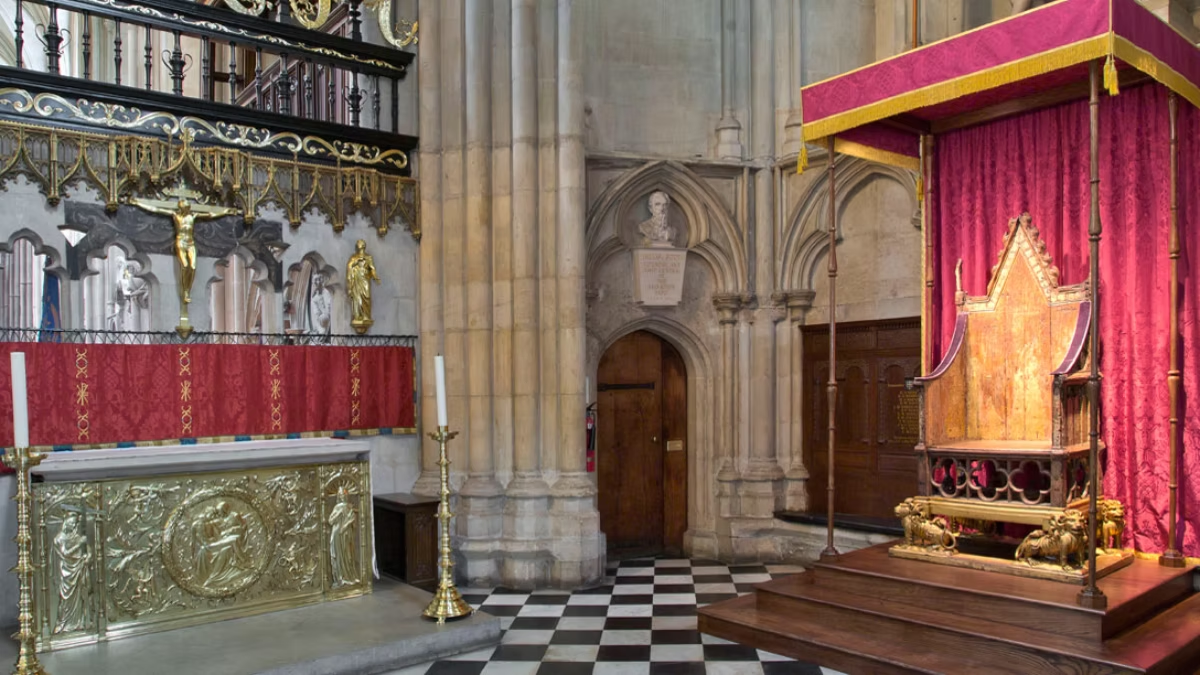
The Coronation Chair, also called St Edward’s Chair, was made around 1300 for King Edward I and has been used at the coronation of English and British monarchs for more than 700 years — most recently King Charles III on 6 May 2023. It was built to hold the Stone of Scone and is displayed near St George’s Chapel by the Great West Door, making it one of the oldest pieces of furniture in Britain still used for its original purpose.
Tucked near the West Door of Westminster Abbey stands a battered oak throne that has crowned nearly every English and British monarch for seven centuries. The Coronation Chair looks unassuming at first glance, scarred by graffiti and age, but few objects anywhere carry as much history.
This guide covers where the chair came from, its link to the Stone of Scone, how it has been used across more than 700 years including the 2023 coronation of King Charles III, and where to find it when you visit.
What the Coronation Chair Is
The Coronation Chair is a wooden throne, about 6 feet 9 inches tall, commissioned around 1300 by King Edward I. It was made to enclose the Stone of Scone, which Edward had taken from Scotland. Every coronation seated in it since the early 1300s has made it the central object of the ceremony and one of the oldest dated pieces of English furniture.
The chair is a tall Gothic throne of oak, made around 1300 on the orders of Edward I. It once glittered with gilding, colored glass and painted figures, though centuries of use have worn it back to bare wood. Its most striking feature is a compartment beneath the seat, built specifically to hold the Stone of Scone. That deliberate design — a throne built around a captured relic — tells you exactly what the chair was meant to symbolize.
The Stone of Scone Connection
The Stone of Scone, or Stone of Destiny, was the ancient stone on which Scottish kings were crowned. Edward I seized it in 1296 and had the Coronation Chair built to hold it, symbolizing English claims over Scotland. The stone sat beneath the chair for 700 years and now lives in Scotland, returning to Westminster Abbey only for coronations.
The chair and the Stone of Scone are inseparable in the story. Edward I took the stone from Scotland in 1296 as a trophy of conquest and had it enclosed within the new chair, so that every monarch crowned in it sat symbolically above Scotland’s own coronation stone. The stone was returned to Scotland in 1996 and is kept there, but it travels back to Westminster Abbey for coronations — as it did in 2023 — before returning north again. It’s a link that still carries political weight today.
700 Years of Coronations
Almost every English and British monarch since the early 14th century has been crowned seated in this chair, placed before the High Altar on the Cosmati Pavement. The list runs through the centuries, and the chair has witnessed the making of Tudors, Stuarts, Hanoverians and Windsors alike. The most recent occasion was the coronation of King Charles III on 6 May 2023, continuing a tradition that stretches back to when the chair was new. The Abbey’s role goes back even further, as our guide to the Abbey’s history explains.
The Abbey as Coronation Church
Westminster Abbey has been the coronation church of English and British monarchs since 1066, when both Harold II and William the Conqueror were crowned here. Around 40 coronations have taken place in the Abbey since, making it central to the nation’s royal life for nearly a thousand years — a role no other church in Britain shares.
The Coronation Chair belongs to a much longer story. Westminster Abbey has been the setting for coronations since 1066, the year of both Harold II’s crowning and, on Christmas Day, William the Conqueror’s. Some 40 coronations have followed in the centuries since, tying the Abbey to the monarchy more closely than any other building in the country. It is also the burial place of many of those same monarchs, as our guide to the royal tombs describes.
The Graffiti and the Damage
Look closely at the chair and you’ll see centuries of carved graffiti — names and initials cut mostly by choirboys and Westminster schoolboys in the 18th and 19th centuries, when the chair was far less protected than it is now. It has survived a suffragette bomb in 1914 and being moved for safekeeping during the World Wars. A major conservation project has since stabilized and cleaned it. All of this wear is part of why it feels so alive: it’s not a pristine museum piece but a working object with a very long life.
Where to See It
The Coronation Chair is displayed near St George’s Chapel, just inside the Great West Door — close to where your visit begins and ends. Because it sits near the entrance, it’s easy to walk straight past on the way in, so it’s worth doubling back if you miss it. It fits naturally into the wider interior route, and a standard entrance ticket covers it along with the rest of the church.
Frequently Asked Questions
How old is the Coronation Chair?
The Coronation Chair was made around 1300, on the orders of King Edward I, which makes it over 700 years old. It’s one of the oldest dated pieces of furniture in Britain still used for its original purpose. Despite its age it remains a functioning ceremonial object, used most recently at the coronation of King Charles III in May 2023.
Why was the Coronation Chair made?
Edward I commissioned it around 1300 to hold the Stone of Scone, the ancient stone on which Scottish kings had been crowned, which he had seized in 1296. Enclosing the stone within an English coronation throne was a deliberate statement of power over Scotland. From the early 1300s onward, English and later British monarchs were crowned seated in it.
Is the Stone of Scone still in the chair?
Not permanently. The Stone of Scone was returned to Scotland in 1996 and is kept there, but it travels back to Westminster Abbey and is placed beneath the chair for coronations, as it was for King Charles III in 2023. For the seven centuries before 1996, the stone sat under the seat continuously. On an ordinary visit you’ll see the chair without the stone.
When was the Coronation Chair last used?
It was last used at the coronation of King Charles III on 6 May 2023. For that ceremony the Stone of Scone was brought down from Scotland and placed beneath the chair, and the chair was set before the High Altar as it has been for centuries. Between coronations it stands on display near the West Door.
Where is the Coronation Chair displayed?
It is displayed near St George’s Chapel, just inside the Great West Door of the Abbey — close to where the visitor route begins and ends. Because it sits near the entrance rather than deep in the church, some visitors walk past it without realizing. If you don’t spot it on the way in, look again as you finish your visit.
Can I sit in the Coronation Chair?
No. The chair is a fragile, priceless historic object and is protected behind a barrier — only monarchs are seated in it, and only at their coronation. Visitors view it from a short distance. You can get close enough to see the carved graffiti and worn oak, but touching or sitting in it isn’t permitted.
Has the Coronation Chair ever been damaged?
Yes, repeatedly over its long life. It carries carved graffiti from 18th- and 19th-century choirboys and schoolboys, it was targeted by a suffragette bomb in 1914, and it was moved for protection during both World Wars. A modern conservation program has since cleaned and stabilized it. The visible wear is now considered part of its history rather than damage to be hidden.
Is the Coronation Chair included in a standard ticket?
Yes. The Coronation Chair is part of the main Abbey interior, so a standard entrance ticket covers it, and the included multimedia guide explains its history as you pass. No separate ticket is needed. To understand how the coronation ceremony works around it, a guided tour or a verger-led tour adds context you won’t get from the labels alone.
How does the coronation ceremony use the chair?
During a coronation the chair is moved to the center of the church before the High Altar, on the medieval Cosmati Pavement, with the Stone of Scone placed beneath it. The monarch is seated in it for the crowning itself — the most sacred moment of the service. Afterward the chair returns to its display position near the West Door for visitors to see.
