

Who Is Buried at Westminster Abbey? Kings, Poets & More
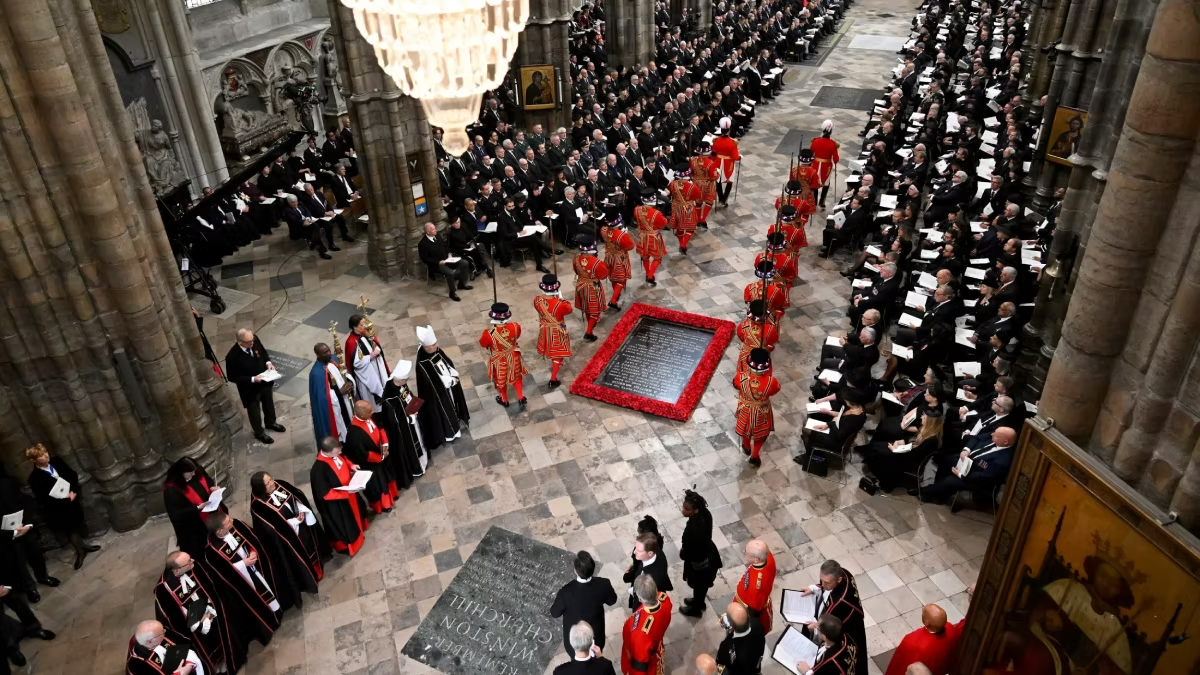
More than 3,300 people are buried or memorialized at Westminster Abbey, including around 18 kings and queens, celebrated poets in Poets’ Corner such as Chaucer and Dickens, scientists including Isaac Newton and Charles Darwin, statesmen, soldiers, and the Unknown Warrior. It is less a single tomb than a national gallery of the dead, spanning nearly a thousand years of British life.
Few buildings anywhere hold so many famous names in one place. Walk the length of Westminster Abbey and you pass monarchs, the poets who shaped English literature, the scientists who reshaped how we see the universe, and ordinary soldiers honored for their sacrifice — all within one working church.
This guide is the overview: how many people are buried here, the main categories of the famous dead, the most notable names in each, and where to go deeper on the monarchs, the poets and the scientists in particular.
How Many People Are Buried at Westminster Abbey?
Around 3,300 people are buried or commemorated at Westminster Abbey. That figure includes both actual burials and memorials to people buried elsewhere, so not every famous name on the walls lies beneath the floor. Among them are roughly 18 monarchs, dozens of poets and writers, leading scientists, prime ministers, composers, and the Unknown Warrior representing the fallen of the First World War.
The number surprises people because the Abbey has been a place of burial for nearly a thousand years, since long before it became the coronation church. Space ran out centuries ago, which is why so many later figures are honored with a memorial, plaque or ledger stone rather than an actual grave. Reading the floor and walls carefully, you will often see the word “buried” on some and “memorial to” on others.
The result is a layered map of British history. To make sense of it, it helps to think in categories — royalty, poets, scientists, statesmen, and the military — each with its own part of the church and its own standout names.
Kings and Queens
Around 18 monarchs are buried in the Abbey, clustered around the shrine of Edward the Confessor and in the Tudor Lady Chapel. They range from medieval kings such as Henry III and Edward I to the Tudors Henry VII, Elizabeth I and Mary I, and Mary, Queen of Scots. The last sovereign buried here was George II in 1760; later monarchs were laid to rest at Windsor.
The royal monuments are the grandest in the building, from gilded bronze effigies to towering canopied tombs. Because there is so much to see, they have their own detailed guide — our royal tombs article walks through the individual kings and queens, where they lie, and the stories behind the finest monuments.
Poets and Writers
Poets’ Corner, in the south transept, is the most famous literary shrine in the world. Geoffrey Chaucer was the first poet buried there, in 1400, and around him gathered the graves and memorials of Edmund Spenser, John Dryden, Samuel Johnson, Charles Dickens, Alfred Lord Tennyson, Rudyard Kipling and Thomas Hardy, among many others.
Not everyone commemorated here is actually buried here. William Shakespeare, Jane Austen, the Brontë sisters, John Milton and William Wordsworth all have memorials in Poets’ Corner while being buried elsewhere. The composer George Frideric Handel, by contrast, is genuinely buried in the transept, alongside actors and playwrights who made their name on the London stage.
Scientists and Engineers
The Abbey is also a resting place for some of the greatest names in science, gathered near the choir screen in an area often called Scientists’ Corner. Isaac Newton is buried beneath an elaborate monument, and Charles Darwin lies close by — a striking pairing given how each transformed human understanding of the natural world.
They are in remarkable company. The physicists Lord Kelvin, J.J. Thomson and Ernest Rutherford are buried nearby, and the ashes of Stephen Hawking were interred between Newton and Darwin in 2018. Our guide to Scientists’ Corner covers who lies where and why the Abbey became a scientific pantheon as well as a religious one.
Statesmen, Soldiers and the Unknown Warrior
Politicians and public figures fill much of the nave and north transept, including prime ministers such as William Gladstone and Clement Attlee, and reformers, explorers and engineers — the missionary and explorer David Livingstone among them. Many are marked by grand Victorian statuary rather than modest ledger stones.
The most visited grave of all belongs to no famous individual. The Unknown Warrior, buried in the nave near the Great West Door in 1920, holds the body of an unidentified British serviceman of the First World War, standing for all who died. It is the one grave in the Abbey that visitors are asked never to walk across.
Musicians and Others
Beyond the headline categories, the Abbey commemorates a wide cast of British life. Composers and organists including Henry Purcell are buried near the choir, and there are memorials to actors, architects and philanthropists throughout the church. Part of the fascination of a visit is the sheer variety — a coronation church that became, over the centuries, the nation’s collective memorial.
Frequently Asked Questions
How many people are buried at Westminster Abbey?
Around 3,300 people are buried or commemorated in the Abbey. That total includes both actual graves and memorials to people buried elsewhere, so the true number of bodies is lower than the number of famous names you will see. Burials span nearly a thousand years, from medieval monarchs to 20th-century figures, which is why space ran out and later notables received memorials instead.
How many kings and queens are buried at Westminster Abbey?
Roughly 18 monarchs are buried at Westminster Abbey, from Edward the Confessor and medieval kings such as Henry III and Edward I to Tudors including Henry VII, Elizabeth I and Mary I. The last monarch buried here was George II in 1760; subsequent sovereigns were interred at Windsor. Their tombs are covered in detail in our dedicated royal tombs guide.
Which poets are buried at Westminster Abbey?
Poets’ Corner holds the graves of Geoffrey Chaucer, Edmund Spenser, John Dryden, Samuel Johnson, Charles Dickens, Alfred Lord Tennyson, Rudyard Kipling and Thomas Hardy, among others. Many more writers, including Shakespeare, Jane Austen and the Brontë sisters, are commemorated with memorials while being buried elsewhere. Chaucer, buried in 1400, was the first, and the literary shrine grew around him.
Is Isaac Newton buried at Westminster Abbey?
Yes. Isaac Newton is buried beneath a prominent monument near the choir screen, in the area known as Scientists’ Corner. He lies close to Charles Darwin, and the physicists Lord Kelvin, J.J. Thomson and Ernest Rutherford are nearby. In 2018 the ashes of Stephen Hawking were interred between Newton and Darwin, adding a modern chapter to the Abbey’s scientific graves.
Is Shakespeare buried at Westminster Abbey?
No. William Shakespeare is buried in Holy Trinity Church in Stratford-upon-Avon, but he has a memorial in Poets’ Corner, unveiled in 1740. This is common at the Abbey: many celebrated figures are commemorated with a statue or plaque while lying elsewhere. Look for the words “buried” or “memorial to” on the monuments to tell the difference as you walk around.
Who is the Unknown Warrior?
The Unknown Warrior is an unidentified British serviceman of the First World War, buried in the nave near the Great West Door in 1920 to represent all those who died without a known grave. His tomb is set in black marble and is the only grave in the Abbey that visitors are asked never to walk over. It has become one of the most visited spots in the church.
Are all the famous people actually buried at Westminster Abbey?
No. A large share of the famous names are memorials rather than burials, because the Abbey ran out of space for graves centuries ago. Shakespeare, Jane Austen, William Wordsworth and many others are commemorated here but buried elsewhere. When you visit, the inscriptions distinguish an actual grave from a memorial, so it is worth reading them closely rather than assuming everyone lies beneath.
Can you visit all the graves at Westminster Abbey?
A standard visit lets you see the great majority of the famous graves and memorials, including Poets’ Corner, Scientists’ Corner, the royal tombs and the Unknown Warrior, following the route with the included multimedia guide or a live guided tour. Some chapels have limited access at busy times or during services, and a few areas are seen only on a verger tour. Allow around 1.5 to 2 hours to do it justice.
How long do I need to see the main graves?
Plan for about 1.5 to 2 hours to take in the royal tombs, Poets’ Corner, Scientists’ Corner and the Unknown Warrior at a comfortable pace with the multimedia guide. If you want to read inscriptions carefully or add a verger tour for the stories behind the monuments, allow longer. Arriving at opening gives you the quietest conditions to linger at the most popular graves.
