

Grave of the Unknown Warrior — Westminster Abbey Guide
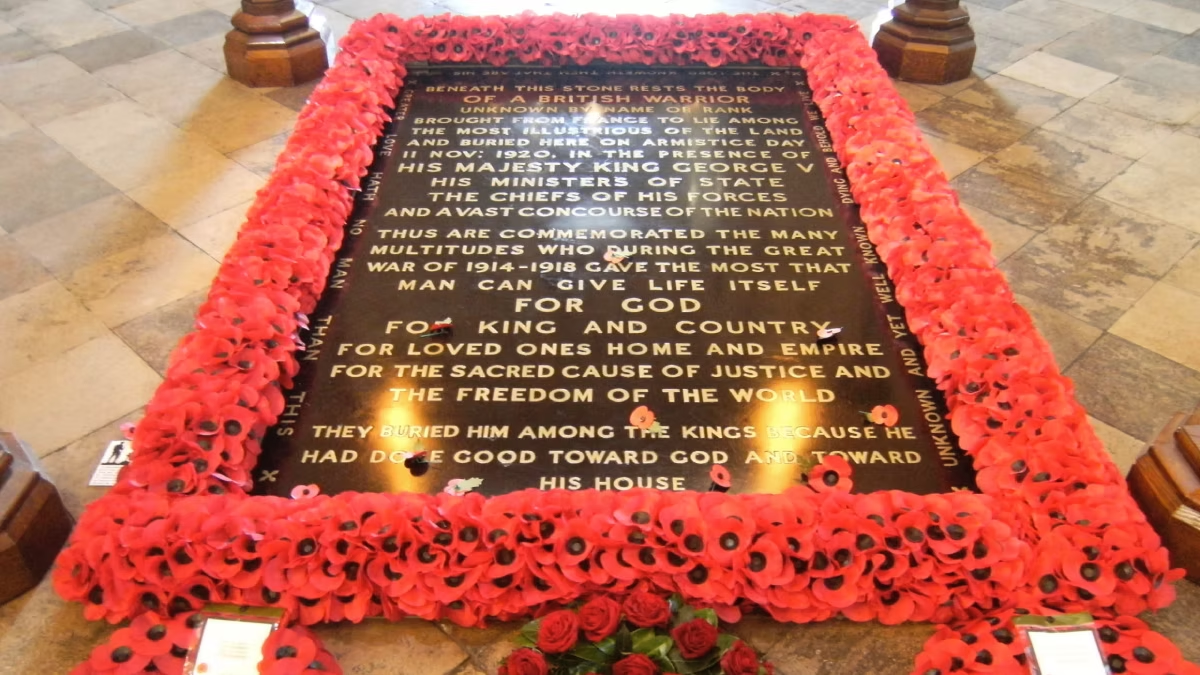
The Grave of the Unknown Warrior is the tomb of an unidentified British soldier of the First World War, buried in the nave of Westminster Abbey by the Great West Door on 11 November 1920. He represents all the war dead who were never identified. The grave is covered by a slab of black Belgian marble and is the only floor tomb in the Abbey that is never walked upon.
Just inside the Great West Door, set into the nave floor, is one of the most visited graves in the world. The Unknown Warrior is a single unidentified soldier chosen to stand for the hundreds of thousands of British and Empire troops who died in the First World War and were never named.
Buried on Armistice Day 1920, the tomb quickly became a place of national mourning and remains one to this day. This guide covers the story of the burial, the black marble slab and its inscription, why it is never walked on, and how it fits into a visit to the Abbey.
The Unknown Warrior at a Glance
| Detail | Grave of the Unknown Warrior |
|---|---|
| Buried | 11 November 1920 |
| Represents | Unidentified WWI war dead |
| Location | Nave, by the Great West Door |
| Tomb material | Black Belgian marble |
| Walked upon? | Never |
| Inscription | Brass lettering from melted shell casings |
Who the Unknown Warrior Is
The Unknown Warrior is a single unidentified British serviceman killed in the First World War, whose body was chosen at random from several exhumed from the main battlefields in France. Because his identity could never be known, he stands as a symbol for every soldier who died and has no known grave. His burial gave grieving families a place to mourn the missing.
The idea came from an army chaplain, the Reverend David Railton, who had seen a rough grave marked “An Unknown British Soldier” at the front. To ensure true anonymity, remains were brought from different battlefields and one was selected without any record of where it came from. That deliberate uncertainty is the point: any family who had lost a son or husband with no known grave could believe this might be him. It’s among the most powerful stops in the Abbey’s interior.
The Burial on Armistice Day 1920
The Unknown Warrior was buried on 11 November 1920, the second anniversary of the Armistice, in a ceremony attended by King George V. The coffin was brought from France and carried through London, and the King followed it as chief mourner. Soil from the battlefields was placed in the grave, so the Warrior lies in French earth within the Abbey.
The funeral was a national occasion. The coffin traveled by warship and gun carriage, passing the newly unveiled Cenotaph on Whitehall before reaching the Abbey. George V walked behind it as chief mourner, and a guard of honor of servicemen lined the route. In the days after the burial, an estimated million people filed past to pay their respects — a scale of public grief that reflected how many families had lost someone in the Abbey’s long history of national moments.
The Black Marble Tomb and Its Inscription
The grave is covered by a slab of black Belgian marble, the only one of its kind in the Abbey, inscribed with brass letters made from melted-down wartime shell casings. The inscription honors the Warrior as one who gave his life for king and country and lies “among the kings” because he served God and his country well. A border of red poppies usually surrounds it.
The stone itself carries meaning. The black marble came from Belgium, close to the battlefields, and the brass of the lettering was made from melted shell casings gathered during the war. The long inscription ends by noting the Warrior is buried among kings because he gave the most a person can give — the everyday soldier honored in the company of monarchs. It’s a striking contrast with the grand royal tombs elsewhere in the church.
Why It Is Never Walked Upon
The Grave of the Unknown Warrior is the only floor tomb in Westminster Abbey that visitors never step on. Every other memorial slab in the nave and quire can be walked across, but this one is kept clear as a permanent mark of respect, usually bordered by red poppies. There is one much-loved tradition attached to it: royal brides married in the Abbey lay their wedding bouquets on the grave. The custom began with the future Queen Mother in 1923 and continues today, most recently at the Abbey’s royal weddings, so a fresh bouquet sometimes appears on the stone.
National Significance and How to Visit
The Grave of the Unknown Warrior became a model for tombs of the unknown soldier around the world, and it remains a focus of national remembrance every November. You’ll find it just inside the Great West Door, so it’s the first major grave you reach on a standard visit, included in a normal entrance ticket.
The tomb inspired similar memorials in France, the United States and beyond, and it is central to the Abbey’s role in national commemoration. Because it sits right at the west end, you reach it near the start of the visitor route, covered by a standard entrance ticket. It can be busy at the entrance, so arriving near opening gives you a quieter moment. A guided tour draws out the story and the 1920 ceremony in more detail.
Frequently Asked Questions
Who is the Unknown Warrior at Westminster Abbey?
The Unknown Warrior is an unidentified British serviceman killed in the First World War, buried in the Abbey in 1920 to represent all the war dead who were never identified. His body was chosen at random from several exhumed on the battlefields so that his identity could never be known. He stands as a symbol for every family that lost someone with no known grave.
When was the Unknown Warrior buried?
He was buried on 11 November 1920, the second anniversary of the Armistice that ended the First World War. King George V attended as chief mourner, following the coffin as it was carried into the Abbey. In the days afterward, around a million people came to pay their respects at the new grave in the nave.
Where is the Grave of the Unknown Warrior?
It’s in the nave of Westminster Abbey, set into the floor just inside the Great West Door, so it’s the first major grave you encounter on a visit. The tomb is a slab of black marble surrounded by a border of red poppies. Because it’s at the west end, you don’t need to walk far into the Abbey to find it.
Why is the grave never walked on?
The Grave of the Unknown Warrior is the only floor tomb in the Abbey that is never stepped on, kept clear as a permanent mark of respect. All the other memorial slabs across the nave and quire can be walked over, but this one is deliberately protected. It’s usually bordered by poppies to keep visitors from crossing it.
Why do royal brides lay their bouquets on the grave?
The tradition began in 1923, when the future Queen Mother laid her wedding bouquet on the grave in memory of her brother, killed in the war. Since then, royal brides married at the Abbey have followed the custom, placing their bouquets on the tomb, often the day after the wedding. It links the joy of a royal marriage with remembrance of the war dead.
What does the tomb inscription say?
The black marble slab is inscribed in brass letters made from melted wartime shell casings, honoring the Warrior who gave his life for king and country. The inscription explains that he is buried among kings because he served God and his country faithfully. It’s a long text, and reading it in full is part of what makes the grave so moving.
Is the Grave of the Unknown Warrior included in a ticket?
Yes. The grave is part of the main Abbey and included in a standard entrance ticket with no extra charge. It sits just inside the Great West Door, at the start of the visitor route. A guided tour tells the story in person, but only the Jubilee Galleries and verger-led tours cost more; the tomb itself is covered by general admission.
Why is the Unknown Warrior nationally significant?
The grave gave a grieving nation a single place to mourn the hundreds of thousands of missing dead, and it became the model for tombs of the unknown soldier in other countries. It remains a focus of remembrance each November and is visited by heads of state on official occasions. More than a century on, it’s still one of the Abbey’s most powerful sites.
How long should I spend at the grave?
Only a few minutes are needed to see the tomb and read the inscription, but many visitors pause longer to reflect, especially around Remembrance Day. Because it’s right at the entrance, it fits easily into the start of a 1.5-to-2-hour Abbey visit. Take a moment to read the full inscription before moving into the nave.
