

Cloisters & Chapter House — Westminster Abbey 2026
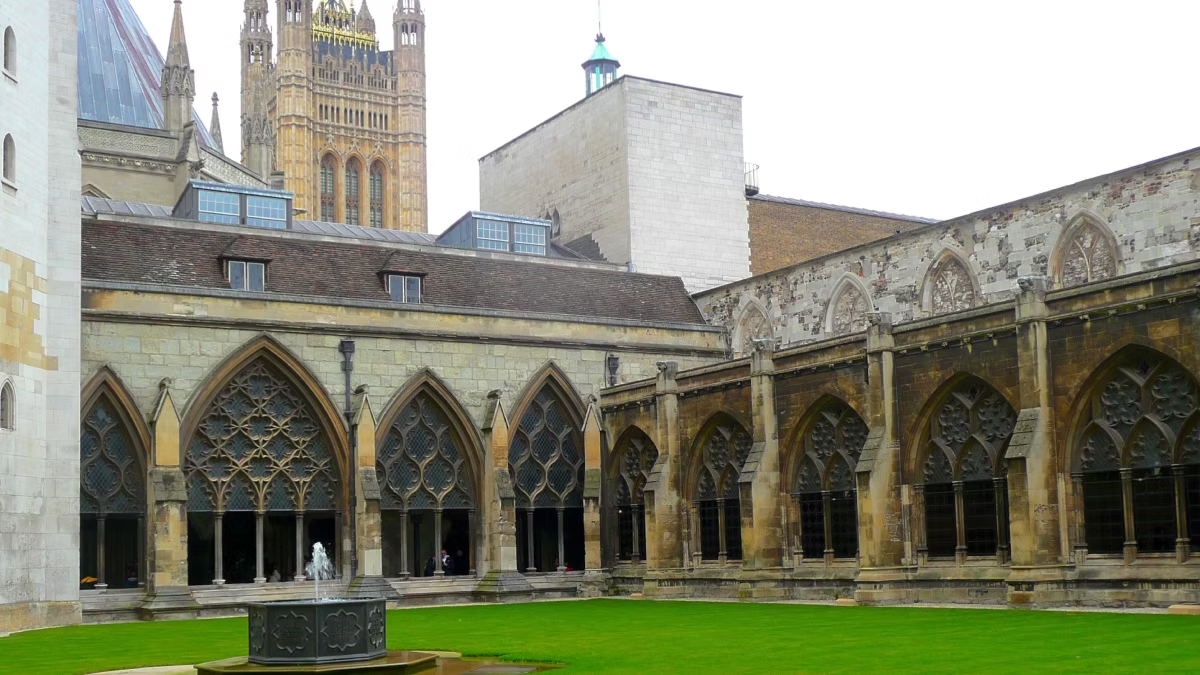
The Cloisters and Chapter House at Westminster Abbey are the surviving heart of its medieval monastery. The four covered walkways of the cloisters once linked the monks’ daily life, while the octagonal 13th-century Chapter House — famous for its tiled floor and medieval wall paintings — hosted the King’s Great Council and the early House of Commons. Both are included in your standard admission and are usually far quieter than the main church.
Most visitors pour straight through the Nave and Poets’ Corner, but step out into the Cloisters and you enter the older, calmer world of the Benedictine monastery that Westminster Abbey once was. The adjoining Chapter House is one of the finest medieval interiors in England and a birthplace of English parliamentary government.
This guide covers the cloisters, the octagonal Chapter House, the nearby Pyx Chamber, why this corner of the Abbey is so often overlooked, and how to make the most of it in 2026.
The Cloisters & Chapter House at a Glance
| Detail | Cloisters & Chapter House |
|---|---|
| What it is | The medieval monastic quarter of the Abbey |
| Chapter House built | 1250s, octagonal, 13th century |
| Highlights | Tiled floor, medieval wall paintings, tracery windows |
| Historic role | King’s Great Council & early House of Commons met here |
| Also nearby | The Pyx Chamber |
| Ticket | Included in standard Abbey admission |
The Medieval Cloisters
The cloisters are four covered walkways around a central open garth that formed the core of Westminster Abbey’s Benedictine monastery. Monks used them for study, processions and daily movement between the church and their living quarters. Largely 13th and 14th century, they survive remarkably intact and today give access to the Chapter House, the Pyx Chamber and the quieter monastic buildings — and they’ve served as a backdrop for several films.
Walk the cloisters and you’re following the same sheltered route the monks took between the church, the refectory and the dormitory. The stone benches, worn paving and traceried openings onto the central lawn have changed little since the medieval monastery was dissolved in the 16th century. Their atmospheric, unmistakably medieval look has made them a favorite filming location, standing in for Hogwarts corridors and other period settings on screen. The cloisters also connect to the Jubilee Galleries entrance and lead you naturally away from the crowds around Poets’ Corner.
The Octagonal Chapter House
The Chapter House is a spectacular octagonal room built in the 1250s, where the monks gathered daily to hear a chapter of their rule read aloud. Its slender central column fans out to support the vault, and it retains a rare 13th-century tiled floor and faded medieval wall paintings. Beyond monastic use, it hosted the King’s Great Council and the early House of Commons, giving it a founding place in English parliamentary history.
Step inside and the Chapter House opens into a soaring eight-sided space, its vaulted ceiling springing from a single central pillar and its walls pierced by huge windows filled with tracery. Underfoot is one of the best-preserved medieval tiled floors in the country, laid in the 1250s, and around the walls survive fragments of medieval wall paintings depicting scenes of the Apocalypse and the Last Judgment. This was the daily meeting room of the monks — the “chapter” — but its size and grandeur also made it a natural venue for affairs of state. From the 13th century it was used by the King’s Great Council and by the Commons in the earliest days of Parliament, before they moved permanently to the nearby Palace of Westminster.
The Pyx Chamber
Off the east cloister lies the Pyx Chamber, one of the oldest surviving parts of the Abbey, dating to around 1070 in the reign of Edward the Confessor’s successors. It once served as a strongroom, guarding royal treasure and the standard coins used in the “Trial of the Pyx,” the annual test of the currency’s weight and purity. Its low vaulted ceiling and massive walls feel worlds apart from the soaring Gothic architecture of the main church, and it’s a reminder of just how far back the Abbey’s story reaches.
Why This Corner Is Often Quieter
The Cloisters, Chapter House and Pyx Chamber sit off the main visitor route, so many people miss them or rush past. Because they’re included in your admission and draw fewer crowds than the Nave or Poets’ Corner, they’re one of the best places at Westminster Abbey to slow down. Visiting them early or late in your circuit gives you the medieval monastery at its most peaceful.
The main flow of visitors follows the royal tombs and Poets’ Corner, leaving the monastic quarter comparatively calm even when the church is busy. That makes the cloisters a good place to catch your breath midway through a visit, and the Chapter House rewards a few unhurried minutes to take in the vault and floor. Timing helps too: arriving near the 9:30am opening means you can have this corner almost to yourself.
Fitting Them Into Your Visit
Both the cloisters and the Chapter House are covered by your entrance ticket, so there’s nothing extra to pay or book. The multimedia guide included with admission covers this part of the Abbey, and the cloisters usually come toward the end of the standard route, after the main church. Allow an extra 15 to 20 minutes here on top of your main visit; our guide on how long to spend sets out a sensible order.
Frequently Asked Questions
Are the Cloisters and Chapter House included in Abbey admission?
Yes. Both the medieval cloisters and the octagonal Chapter House are covered by your standard Westminster Abbey entrance ticket, with nothing extra to pay or reserve. The nearby Pyx Chamber is also included. Only the Queen’s Diamond Jubilee Galleries and verger-led tours cost more, so this monastic quarter is one of the best-value parts of a visit and is often the quietest.
What is the Chapter House at Westminster Abbey?
It’s a large octagonal room built in the 1250s where the monks met daily to hear a chapter of their monastic rule read aloud. A single slender column fans out to carry the vault, and the room keeps a rare 13th-century tiled floor and faded medieval wall paintings. It also has national significance: the King’s Great Council and the early House of Commons met here before Parliament moved to its own building.
Why did Parliament meet in the Chapter House?
In the 13th and 14th centuries, England had no dedicated parliament building, and the Chapter House offered a grand, secure room right beside the royal Palace of Westminster. The King’s Great Council and the early Commons gathered here to deliberate, making it one of the cradles of English parliamentary government. The Commons later moved into the Palace of Westminster permanently, but the Chapter House kept its place in that founding story.
What are the cloisters used for?
The cloisters were the covered walkways at the center of the Abbey’s Benedictine monastery, used by monks for study, processions and moving between the church and their living quarters. Today they’re part of the visitor route, giving access to the Chapter House, the Pyx Chamber and the Jubilee Galleries entrance. Their intact medieval character has also made them a popular filming location for period productions.
What is the Pyx Chamber?
The Pyx Chamber is one of the oldest surviving rooms in Westminster Abbey, dating to around 1070. It served as a strongroom for royal and Abbey treasure and gave its name to the “Trial of the Pyx,” the annual test of the coinage’s weight and purity. Its low vaulted ceiling and thick walls contrast sharply with the soaring Gothic church, and it’s included in your standard admission.
Are the cloisters a filming location?
Yes. The cloisters’ atmospheric medieval walkways have featured in several films and television productions, standing in for period and fantasy settings, including sequences associated with the Harry Potter films. Filming happens outside normal visiting hours, so you won’t see it on a typical visit, but you can walk the same passages. Photography rules for visitors vary, so check the current policy on arrival.
How long should I spend in the Cloisters and Chapter House?
Allow about 15 to 20 minutes on top of your main Abbey visit to walk the cloisters, take in the Chapter House and glance into the Pyx Chamber. Because this corner is quieter than the main church, it’s a relaxed way to end your circuit. Combined with the 1.5 to 2 hours the full Abbey takes, this keeps a standard visit under two and a half hours.
Are the Chapter House and cloisters open on Sundays?
No. Westminster Abbey is closed to sightseeing all day Sunday, so the cloisters, Chapter House and Pyx Chamber can only be visited Monday to Saturday during normal hours. On Sundays the Abbey opens only for free worship, with no tourist access to these areas. Because the Abbey can also close at short notice for events, check the opening hours before you travel.
Is this part of the Abbey accessible?
The cloisters are largely at ground level and step-free, though the medieval paving is uneven in places, and the Chapter House is reached across the cloister. Some thresholds and older surfaces can be tricky for wheelchair users, so it’s worth planning your route in advance. Our accessibility guide covers step-free access, surfaces and where staff can help.
