

Westminster Abbey Royal Tombs — Kings & Queens Guide
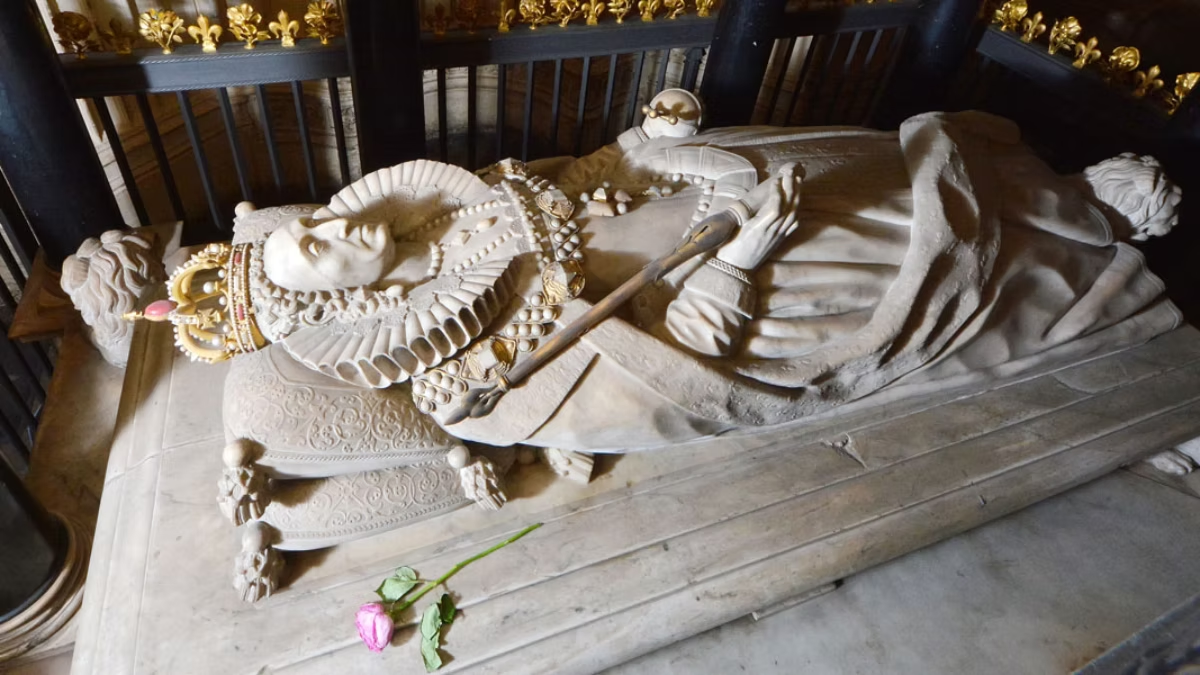
Around 18 kings and queens are buried at Westminster Abbey. At the heart lies the shrine of Edward the Confessor, ringed by medieval monarchs such as Henry III and Edward I. The Tudors dominate the Lady Chapel, where Henry VII and Elizabeth of York, the rival sisters Elizabeth I and Mary I, and Mary, Queen of Scots all rest. George II, buried in 1760, was the last monarch laid to rest here.
Westminster Abbey is not only where monarchs are crowned — it is where many of them are buried, in some of the finest royal monuments in Europe. Their tombs cluster in the chapels around the High Altar, turning the east end of the church into a dynastic map running from the 11th century to the 18th.
This guide focuses on the monarchs specifically: the shrine at the center, the great medieval and Tudor tombs, who lies with whom, and the finest monuments to seek out among the royal dead.
Which Monarchs Are Buried at Westminster Abbey?
About 18 monarchs are buried at Westminster Abbey, including Edward the Confessor, Henry III, Edward I, Edward III, Richard II, Henry V, Henry VII, Edward VI, Mary I, Elizabeth I, Mary Queen of Scots, James I, Charles II, William III, Mary II, Queen Anne and George II. The last was George II in 1760; every monarch since has been buried at Windsor.
The royal burials are concentrated in the chapels ringing the shrine of Edward the Confessor and in the great Tudor Lady Chapel at the far east end, built by Henry VII. Walking this part of the Abbey takes you past roughly five centuries of English and British sovereigns, many under carved effigies that are important artworks in their own right.
Not every monarch of the period is here — some, like the earlier Norman kings, are buried elsewhere — but the concentration of royalty in these few chapels is unmatched anywhere in Britain. The tombs below are the ones most worth seeking out.
The Shrine of Edward the Confessor
At the very center, directly behind the High Altar, stands the shrine of Edward the Confessor, the king who built the earlier abbey consecrated in 1065 and was later made a saint. Henry III rebuilt the shrine in its present form and had the saint’s body moved into it in 1269, making Edward the spiritual heart of the whole church.
The shrine’s central position is deliberate: the later royal tombs were arranged around it so that generations of monarchs could lie close to the sainted king. This is the holiest spot in the Abbey and its access is often restricted, so you may view it from the surrounding ambulatory rather than up close.
The Plantagenet Kings — Henry III and Edward I
Henry III, who died in 1272, lies in a magnificent tomb of porphyry and Cosmati mosaic just north of the shrine — the same Italian craftsmanship seen in the Cosmati Pavement he commissioned before the High Altar. His gilt-bronze effigy is one of the earliest and finest of its kind in England.
Close by is his son Edward I, “Longshanks,” who died in 1307. His tomb is strikingly plain — a plain grey marble chest with no effigy — and bears the later inscription “Edwardus Primus Scottorum Malleus,” the Hammer of the Scots. Nearby lie other Plantagenets including Edward III, Richard II and Henry V, whose chantry chapel rises dramatically above the ambulatory.
The Tudors in the Lady Chapel
The Lady Chapel, better known as the Henry VII Chapel, is the grandest royal mausoleum in the Abbey, completed around 1519 with spectacular fan-vaulted ceilings. At its center lie Henry VII and his queen, Elizabeth of York, beneath gilt-bronze effigies by the Italian sculptor Pietro Torrigiano — among the finest Renaissance monuments in the country.
In a north aisle of the same chapel, Elizabeth I is buried in the same tomb as her half-sister and predecessor Mary I. Only Elizabeth has an effigy, but the Latin inscription notes that the two rivals, so divided in life over religion, share a grave in the hope of resurrection. In the opposite aisle stands the tomb of Mary, Queen of Scots, executed in 1587 and reburied here in grandeur by her son, James I, who lies elsewhere in the chapel.
The Last Monarch Buried — George II
The final sovereign to be buried at Westminster Abbey was George II, who died in 1760 and was interred in the Henry VII Chapel beside his wife, Queen Caroline. Famously, he had the sides of their coffins removed so their remains would mingle. After him, royal burials moved to St George’s Chapel at Windsor, which is why no monarch since George II lies in the Abbey.
That makes the royal tombs a closed collection spanning almost exactly seven centuries, from Edward the Confessor’s shrine to George II’s vault. It is one of the reasons the Abbey feels like a single, continuous record of the monarchy’s history rather than a museum of separate reigns.
Seeing the Royal Tombs
The royal tombs are all included in standard admission, and you follow the route through the chapels around the shrine and into the Lady Chapel as part of a normal visit. Some areas — especially the Confessor’s shrine — have restricted access and may be closed for services or when fragile, so not every tomb can be approached closely on every day.
For the stories behind the monuments, a live guided tour or a verger-led tour is invaluable, as guides can explain who lies where and untangle the tangled Tudor rivalries. If you prefer to explore at your own pace, the included multimedia guide on an entrance ticket covers the main royal tombs as you go.
Frequently Asked Questions
How many monarchs are buried at Westminster Abbey?
Around 18 kings and queens are buried at Westminster Abbey, from Edward the Confessor and Henry III through the Tudors and Stuarts to George II. Some monarchs of the period are buried elsewhere, but the concentration around the shrine and in the Lady Chapel is unmatched in Britain. Our overview of who is buried sets the monarchs alongside the poets and scientists.
Who was the last monarch buried at Westminster Abbey?
George II, who died in 1760, was the last monarch buried at Westminster Abbey. He was interred in the Henry VII Chapel beside his wife, Queen Caroline. After his reign, royal burials moved to St George’s Chapel at Windsor Castle, so every British monarch since George II has been buried there rather than at the Abbey.
Is Elizabeth I buried at Westminster Abbey?
Yes. Elizabeth I is buried in the Henry VII Chapel, sharing a tomb with her half-sister Mary I. Only Elizabeth is shown by an effigy, but both queens lie together, and the Latin inscription reflects on how the two religious rivals share one grave. It is one of the most visited royal monuments in the Abbey.
Where is Mary, Queen of Scots buried?
Mary, Queen of Scots is buried in the south aisle of the Henry VII Chapel, opposite the tomb of Elizabeth I. Executed in 1587, she was reburied at the Abbey in a grand monument erected by her son, James I, after he became king of England. Her tomb is larger and finer than that of Elizabeth, the queen who had ordered her execution.
Where is Edward the Confessor buried?
Edward the Confessor lies in his shrine at the very center of the Abbey, directly behind the High Altar. He built the earlier church consecrated in 1065 and was later canonized; Henry III rebuilt the shrine and moved his body into it in 1269. The later royal tombs were deliberately arranged around this shrine, the holiest spot in the church.
What is the finest royal tomb in Westminster Abbey?
Many consider the tomb of Henry VII and Elizabeth of York in the Lady Chapel the finest, with gilt-bronze effigies by the Renaissance sculptor Pietro Torrigiano beneath spectacular fan vaulting. The Cosmati-work tomb of Henry III near the shrine is also outstanding, as is the towering chantry chapel of Henry V. Which impresses most is a matter of taste, but all are among Europe’s great royal monuments.
Can you see all the royal tombs on a normal visit?
Most of them, yes. Standard admission takes you through the chapels around the shrine and into the Lady Chapel, so you can see the great majority of the royal tombs. However, the shrine of Edward the Confessor itself often has restricted access, and chapels can close for services. A guided tour helps you make the most of what is open.
Why did royal burials stop at Westminster Abbey?
Royal burials shifted to St George’s Chapel at Windsor after George II in 1760. Windsor offered a private royal setting and more space, and by then the Abbey’s chapels were crowded with centuries of monarchs and courtiers. As a result, the Abbey’s royal tombs form a self-contained collection running from the 11th century to the mid-18th, unlike its coronations, which continue to this day.
How long do I need to see the royal tombs?
Allow around 45 minutes to an hour for the royal tombs alone if you want to take in the shrine, the Plantagenet kings and the Lady Chapel carefully, within a full Abbey visit of about 1.5 to 2 hours. Arriving at opening gives you the quietest conditions in the narrow chapels, where crowds build quickly later in the morning.
