

Jubilee Galleries Westminster Abbey — 2026 Visitor Guide
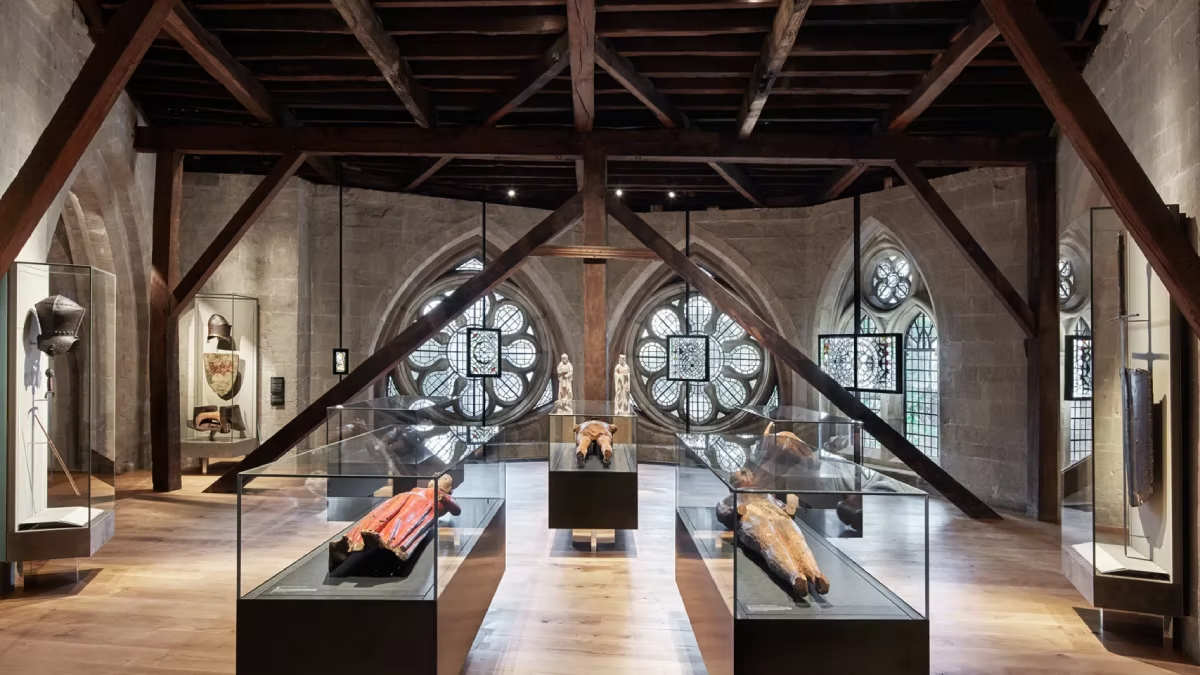
The Queen’s Diamond Jubilee Galleries are a museum set high in Westminster Abbey’s medieval triforium, about 52 feet above the church floor and reached by the Weston Tower lift. Opened in 2018, they display treasures such as royal funeral effigies, the Litlyngton Missal and the Liber Regalis, and offer rare views down into the Abbey. They need a separate £5 timed ticket in 2026, and children go free.
For more than 700 years the triforium — the high gallery running above the Abbey’s arches — was closed storage space that visitors never saw. In 2018 it reopened as the Queen’s Diamond Jubilee Galleries, the Abbey’s first purpose-built museum, and it’s now one of the most rewarding parts of a visit if you plan for it.
This guide explains what the galleries hold, how you reach them, what the £5 timed ticket covers in 2026, and how to fit them into your day.
The Jubilee Galleries at a Glance
| Detail | Queen’s Diamond Jubilee Galleries |
|---|---|
| Location | Medieval triforium, ~52 ft above the Abbey floor |
| Access | Weston Tower lift and stairs |
| Opened | 2018 |
| Ticket | Separate £5 timed ticket (children free) |
| Included in admission? | No — an add-on to the entrance ticket |
| Time needed | 30–45 minutes |
What the Galleries Are
The Queen’s Diamond Jubilee Galleries are a museum built into Westminster Abbey’s medieval triforium, roughly 52 feet above the floor. Opened in 2018 as the Abbey’s first dedicated exhibition space, they display objects drawn from the church’s thousand-year history and let you look straight down into the Nave and Lady Chapel from a vantage point no earlier visitor could reach.
The triforium is the tall arcaded gallery that runs above the main arches on each side of the church. It was designed in the 13th century but never given a public use, so for centuries it served as an attic for the Abbey’s accumulated treasures. The galleries opened in 2018 to mark Queen Elizabeth II’s Diamond Jubilee, turning that hidden level into a carefully lit museum without altering the medieval fabric around it. Because it sits above the working church below, it also gives you a fresh way to understand the Gothic architecture you walked through at ground level.
The Treasures on Display
The galleries show royal funeral effigies, illuminated manuscripts including the Litlyngton Missal and the Liber Regalis, and artifacts spanning the Abbey’s history from the medieval monastery to modern coronations. The wax and wooden effigies — lifelike figures once carried at royal funerals — are the collection’s most striking pieces and are unique to Westminster Abbey.
The star exhibits are the funeral effigies: full-length figures of monarchs and notables, some carved in wood and others modeled in wax, that were once carried on top of the coffin in a royal funeral procession. Alongside them sit two of the Abbey’s greatest manuscripts — the 14th-century Litlyngton Missal, a vast illuminated service book, and the Liber Regalis, the order of service that shaped English coronations for centuries. You’ll also find architectural fragments, textiles, and objects connected to the monarchs buried in the royal tombs below. It’s a collection that rewards slow looking rather than a quick pass.
The Views Down Into the Abbey
Part of the appeal is simply the height. From the galleries you look down the length of the Nave and across into the Lady Chapel, seeing the fan vaulting and the scale of the church from above for the only time on a visit. The Weston Tower — a modern oak-and-glass structure added to carry the lift — is itself worth a moment, and its windows frame views out across Parliament Square. Photography rules vary, so check the current policy at the desk.
Getting Up There: The Weston Tower Lift
You reach the Queen’s Diamond Jubilee Galleries by the Weston Tower, a modern tower added in 2018 that houses a lift and a staircase rising about 52 feet to the triforium. The lift makes the galleries step-free, though the medieval gallery space itself is narrow in places. Entry is by timed ticket, so you go up at the slot you booked rather than whenever you like.
Before 2018 there was no practical way to bring visitors to this level; the Weston Tower solved that with a lift and stair tucked into the angle between the Chapter House and the south transept. The lift means the galleries are reachable without stairs, which matters for anyone planning around step-free access. Space up in the triforium is tighter than the main church, so it can feel busy at popular slots.
What It Costs and How to Book in 2026
The galleries are not part of general admission. You need a separate £5 timed ticket on top of your entrance ticket in 2026, and children go free. You can add the galleries ticket when you book your Abbey entry online or at the desk on the day, subject to availability in each time slot. Because it’s timed, it pays to choose a slot early in your visit so you’re not rushing to make it before the Abbey closes; our guide to how long to spend helps you plan the order. Prices can change, so confirm the current figure on the official site when you book.
Are the Jubilee Galleries Worth It?
For a first-time visitor with limited time, the main Abbey comes first — but if you have an extra 30 to 45 minutes and an interest in the building’s history, the £5 is well spent. The effigies and manuscripts are genuinely rare, and the view down into the church reframes everything you saw below. If your day is short, or you’re visiting with restless children, you can skip it without missing the headline sights of the interior.
Frequently Asked Questions
What are the Queen’s Diamond Jubilee Galleries?
They are Westminster Abbey’s museum, opened in 2018 in the medieval triforium about 52 feet above the church floor. The galleries display treasures from the Abbey’s thousand-year history — royal funeral effigies, illuminated manuscripts and historic artifacts — and offer views down into the Nave and Lady Chapel. They were created to mark Queen Elizabeth II’s Diamond Jubilee and are the Abbey’s first purpose-built exhibition space.
Are the Jubilee Galleries included in the ticket?
No. The galleries need a separate £5 timed ticket in 2026, on top of your standard Abbey admission, though children go free. You can add the galleries ticket when you buy your entrance ticket online or at the desk on the day, subject to availability in each time slot. Prices can change, so confirm the current rate on the official site before your visit.
How much do the Jubilee Galleries cost in 2026?
The galleries cost £5 per adult on top of Abbey admission, and children go free. It’s a timed ticket, so you enter at a set slot rather than whenever you arrive. Because it’s an add-on and not part of general admission, you’ll pay the entry price for the main Abbey first. Check the current figure on the official website, as add-on prices are reviewed periodically.
How do you get up to the galleries?
You take the Weston Tower, a modern oak-and-glass tower built in 2018 that houses a lift and a staircase rising about 52 feet to the triforium. The lift makes the galleries reachable without stairs, which helps if you’re planning around step-free access. The gallery space itself is narrow in places, so it can feel crowded at busy times.
What can you see in the Jubilee Galleries?
The highlights are royal funeral effigies — lifelike wax and wooden figures once carried at royal funerals — plus illuminated manuscripts including the Litlyngton Missal and the Liber Regalis. You’ll also see architectural fragments, textiles and objects tied to the monarchs buried below. From the gallery you can look down the Nave and across the Lady Chapel, a view impossible from the church floor.
How long do you need in the galleries?
Allow about 30 to 45 minutes to take in the exhibits and enjoy the views. Because it’s a timed ticket, aim for a slot early in your visit rather than near closing, so you don’t have to hurry. Combined with the roughly 1.5 to 2 hours a full Abbey visit takes, the galleries push your total time toward two and a half hours.
Are the galleries accessible?
Yes, largely. The Weston Tower lift takes you up to the triforium without stairs, so the galleries are reachable by wheelchair users and anyone who can’t manage the climb. The medieval gallery itself is narrow in places, so it can be tighter than the open church below. See our accessibility guide for the full picture on lifts, ramps and step-free routes.
Are the Jubilee Galleries open on Sundays?
No. Westminster Abbey is closed to sightseeing all day Sunday, so the galleries are only accessible Monday to Saturday during normal visiting hours. Because the galleries are timed and can close for events, it’s worth checking the opening hours and confirming availability before you travel. On Sundays the Abbey opens only for free worship, with no access to the museum.
Do children pay for the Jubilee Galleries?
No. Children go free to the Queen’s Diamond Jubilee Galleries in 2026, though the £5 charge applies to adults. That said, the galleries suit older children and adults with an interest in history more than very young visitors, since the space is quiet and the exhibits are behind glass. If you’re touring with kids, our visiting with kids guide suggests what holds their attention.
